About Systemic Discrimination

Systemic discrimination is carried out, among other things, by ensuring that the basic rights are only granted under pressure, in the most necessary rather than optimal and required manner or level. Deadlines for approving certain rights are defined and breached to protect the system itself, regardless of how this affects the social group or person who needs to realize a right to live without hindrance.

It is also manifested by the fact that measures for equalizing opportunities are not implemented from the start in the planning stage and in creating solutions persons affected by the measures do not participate in any way, other than utilizing what someone else deems best for them at a cost determined appropriate by those implementing systemic measures.

The person or social group to whom a measure applies is treated as an object of societal or individual concern, rather than as the party most responsible for everything that concerns them.

A system in which a part of people without personal experience in an issue assesses the needs of those who do, based on what is best for the system’s sustainability, results in the reduction of others’ needs, wasting of lifetime and opportunities for finding solutions for survival rather than living, and invisibility for part of the population.

Since identity characteristics change throughout life, a system operating in this way does not build a foundation for an adequate response to changes in circumstances. Instead, it limits itself to ad hoc upgrades or entirely lacks a response based on priorities or the availability of resources for services, such as treatment, subsequent measures to equalize opportunities, or barriars removal—often done without the participation of the person or social group affected by the measures.

These are the reasons why there is no investment in the safety and accessibility of what is built and produced, in health and social protection, in the full realization of other social rights, and their improvement. Instead, the consumption of people and what is produced by human hands or still available in nature is encouraged.

The consequences include the unavailability of basic services, even when a person can afford to pay for them by itself, as there are no people to provide them in a way that treats others as they would treat themselves. Moreover, the lack of participation in all phases of realizing a right—such as sharing ownership of the process—turns the end user into a consumer unaware of how something was achieved or how to achieve it.

Any situation that put other people in a position of waiting for realization of basic rights and needs, or forces them to participate in a process that causes them or a social group to waste their lifetime waiting to realize basic rights—something from which no one here is currently exempt—results in a society that inherits only survival mechanisms from the past. Its focus on how to merely survive today makes the society have an anesthetized reactions to its own future and almost no reaction for the future of others.

This is how a society that disables its own population functions. By accepting assigned roles and jobs the people agree to disable one another instead of offering mutual support and acceptance. Being mutually dependent, we could create optimal conditions for all, reducing the work for the people who will come after us.

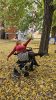
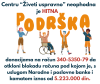
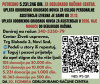
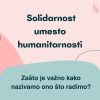
The fiture image is a part of the designs for the products within CLUshop Shop | Redbubble (and Kutak za podršku Centru Živeti uspravno), that Uncut Creation uploaded on December 2nd to support the costs that the cities and municipalities where the Centre organizes support for independent living still do not cover.

Bookmark the permalink.

Leave a Reply

Your email address will not be published. Required fields are marked *